
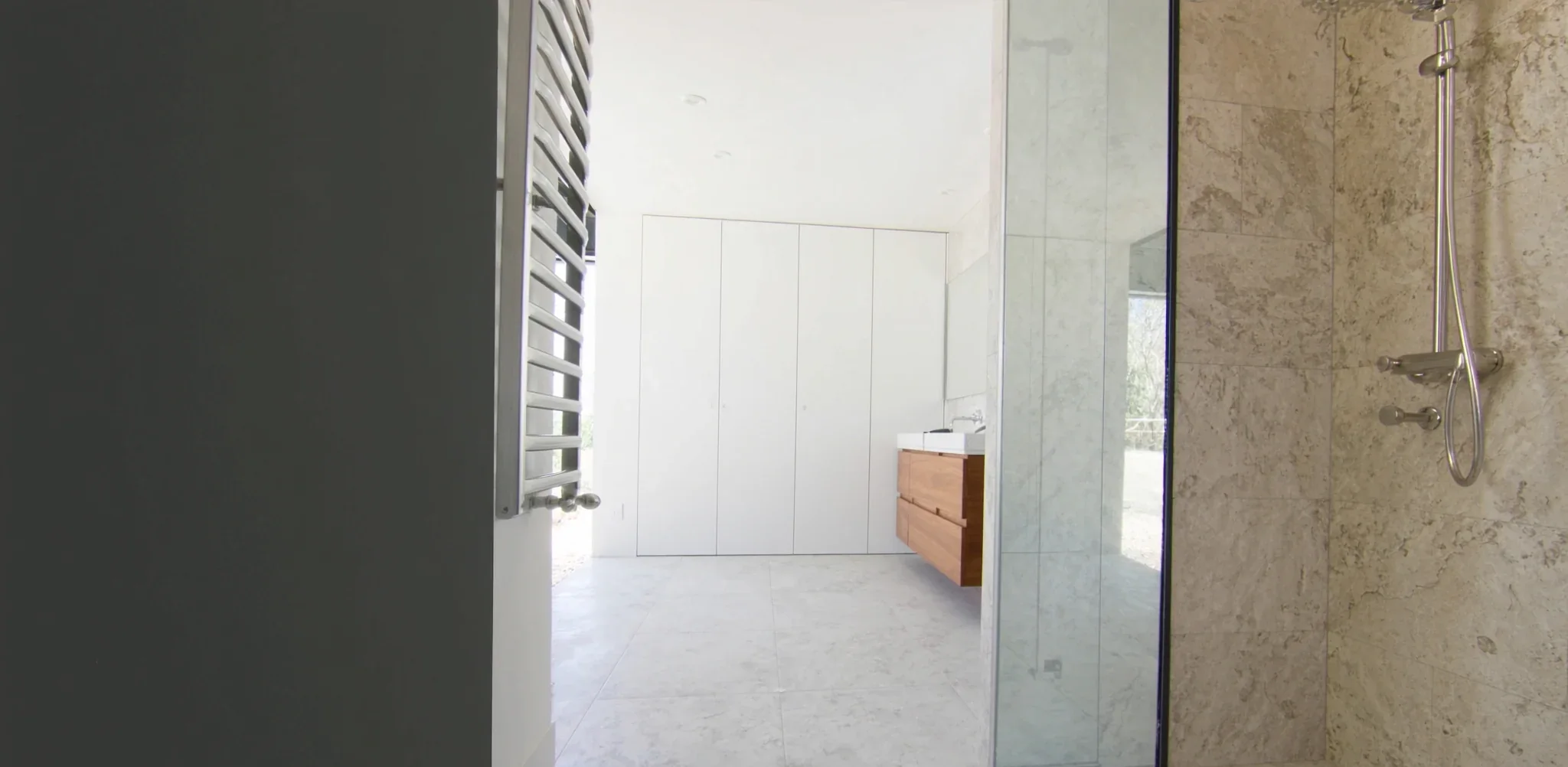
Commercial Tiling across South Australia
Commercial tiling covers floors, walls and wet areas in shops, cafés, offices, medical suites and aged care facilities. SA Tiling Pro brings more than 20 years of experience to finishes that stand up to foot traffic, trolleys and heavy cleaning. We work with builders, shopfitters and business owners across Adelaide and regional South Australia, and program around your trading needs.
- Retail and shopfront tiling
- Hospitality and café floors
- Office and amenities tiling
- Commercial wet area waterproofing
- Slip-resistant floor tiling
Commercial Tiling done properly
Commercial tiling is larger in scale and tighter on program than domestic work. A typical job might be a café floor and splashback, a run of amenities in an office building, a retail shopfront, or a hospitality kitchen with coved skirting tiles and falls to floor wastes. We set out from the drawings, coordinate with the other trades on site, and lay to the tolerances the specification calls for. Where the scope requires it, we also handle removal of existing finishes, screeding and waterproofing.
Good commercial tiling looks flat, level and consistent, and it stays that way under heavy use. Lippage between tiles is kept within the limits in AS 3958.1. Movement joints are placed at the right intervals and at every change of substrate, so thermal and structural movement does not crack tiles or grout. Adhesive coverage is full rather than spot-bedded, because hollow tiles fail under trolleys and point loads. Grout lines are straight, even and fully packed, and floor falls actually reach the waste.
Most commercial tile failures trace back to the substrate, not the tile. Concrete slabs need to be cured, clean and within flatness tolerance before tiling starts, and any levelling compound must be compatible with the adhesive. Amenities, showers and bathrooms need a membrane applied to AS 3740, commercial kitchen floors are waterproofed to the project specification and the membrane manufacturer's system, and external decks or balconies need a membrane to AS 4654. Layout is planned so cuts fall where they are least visible and so falls direct water to wastes rather than to doorways or corners.
What's included
- Retail and shopfront tiling
Floors, feature walls and entries for shops and showrooms. We work to shopfitter drawings and tight handover dates.
- Hospitality and café floors
Front-of-house floors and splashbacks, plus back-of-house kitchen floors with coved skirtings and falls to waste.
- Office and amenities tiling
Bathrooms, end-of-trip facilities and kitchenettes in office buildings, including full waterproofing of wet areas.
- Commercial wet area waterproofing
Membranes to AS 3740 for amenities, showers and bathrooms, to the project specification for commercial kitchens, and to AS 4654 for external balconies and decks, applied and cured before any tiling starts.
- Slip-resistant floor tiling
Selection and installation of floor tiles with a slip rating suited to the area, based on AS 4586 classifications.
- Substrate preparation and screeding
Grinding, levelling compounds and sand-cement screeds so the tile bed is flat, sound and ready for adhesive.
- Tile removal and strip-outs
Removal of existing tiles, adhesive and failed membranes as part of a refit, with the substrate made good afterwards.
- Repairs, regrouting and maintenance
Replacement of cracked or drummy tiles, regrouting of worn joints and resealing of movement joints in occupied premises.
How we approach commercial tiling
- 01
Site inspection and quote
We visit the site, check the substrate and drawings, and confirm the scope. You receive a free, no-obligation written quote.
- 02
Program and coordination
We agree start dates, working hours and sequencing with your builder or site manager. Staged or out-of-hours work can be discussed where the program requires it, subject to availability.
- 03
Preparation and waterproofing
Existing finishes are removed, the substrate is prepared, and membranes are applied and allowed to cure before tiling.
- 04
Tiling and grouting
Tiles are set out from the drawings, laid with full adhesive coverage, then grouted, with movement joints sealed.
- 05
Clean-down and handover
The area is cleaned, defects are checked, and we walk the job with you before handover. Regional sites are scheduled with travel arranged in advance.
Tile options we work with
Not sure what to choose? We will talk you through what suits the space, the budget and the way it will be used.
Porcelain
The default choice for commercial floors. Dense, low-absorption and hard-wearing, with slip-resistant finishes available for wet and entry areas.
Large-format tiles
Tiles of 600 x 1200 mm and larger reduce grout lines in foyers and retail floors. They need a very flat substrate and careful handling on site.
Ceramic wall tiles
Economical for splashbacks, amenities and feature walls. Best kept to walls, since wall-grade ceramic tiles are not rated for floor traffic and glazed ceramics wear faster than porcelain under trolleys.
Natural stone
Granite, marble and limestone suit reception areas and high-end fit-outs. Stone needs sealing and a maintenance plan, and some types mark easily in food service areas.
Terrazzo-look porcelain
Gives the look of poured terrazzo without the cost and curing time. Popular for cafés, offices and hospitality floors.
Mosaics and quarry tiles
Mosaics handle curves, columns and pool surrounds. Quarry tiles remain a proven choice for commercial kitchen floors where grease and acid resistance matter.
Commercial Tiling questions
Straight answers to the questions we hear most about this service.
How long does a commercial tiling job take?
What affects the cost of commercial tiling?
Which tiles are best for high-traffic commercial floors?
Do commercial wet areas need waterproofing?
What grout should be used in commercial areas?
Do I need development approval for commercial tiling?
Commercial Tiling anywhere in South Australia
Choose your region to find your suburb page and local details.
- Adelaide City & North Adelaide
- Adelaide Western Suburbs
- Adelaide Inner South
- Adelaide Eastern Suburbs
- Adelaide Inner North
- Adelaide North-Eastern Suburbs
- Adelaide Northern Suburbs & Adelaide Plains
- Adelaide Hills
- Adelaide Southern Suburbs & McLaren Vale
- Fleurieu Peninsula
- Kangaroo Island
- Murraylands, Mallee & Coorong
- Riverland
- Barossa Valley & Light
- Clare Valley & Mid North
- Port Pirie & Southern Flinders Ranges
- Yorke Peninsula & Copper Coast
- Eyre Peninsula & Whyalla
- Limestone Coast & South East
- Port Augusta & Flinders Ranges
- Outback & Far North
- APY Lands
Ready to talk about commercial tiling?
Get a free, no-obligation quote. We service every suburb and town in South Australia and are ready to bring your plans to life.