
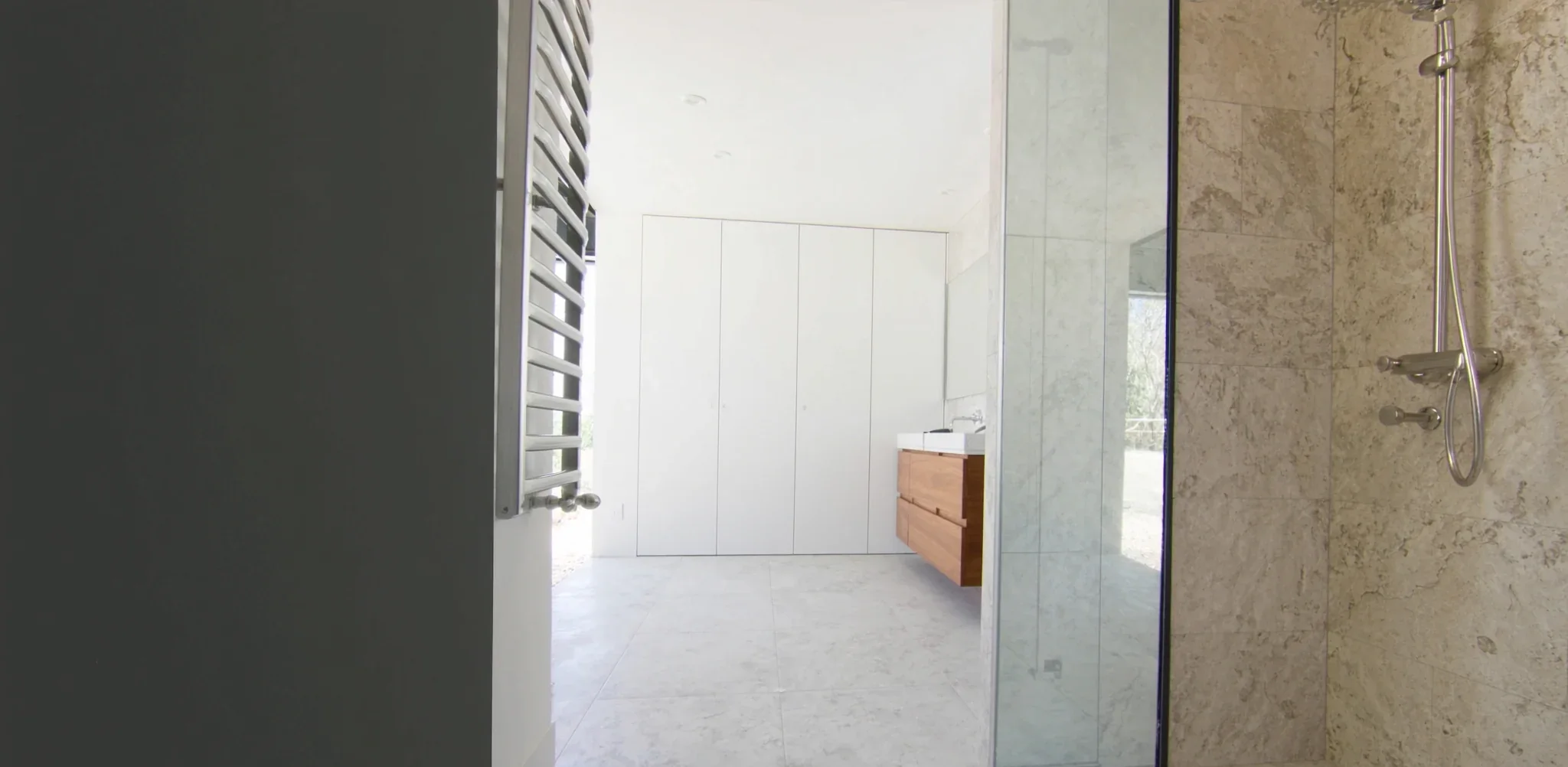
Wall & Feature Tiling across South Australia
Wall and feature tiling covers everything from a single feature wall behind a vanity to full-height tiling in bathrooms, laundries, kitchens and living areas. SA Tiling Pro sets out, cuts and lays wall tiles for homeowners, builders and renovators across Adelaide and the rest of South Australia, with attention to flat substrates, straight lines and clean grout joints.
- Bathroom and shower walls
- Feature and accent walls
- Fireplace and heater surrounds
- Laundry and utility walls
- Half-height and dado tiling
Wall & Feature Tiling done properly
Wall tiling is any tile fixed to a vertical surface. That includes shower walls, bath surrounds, laundry walls, fireplace surrounds, feature walls in living rooms and entries, and half-height wainscot tiling in hallways. The work involves checking the substrate, setting out the layout so cuts are balanced, applying adhesive with the right notched trowel, fixing tiles with consistent joints, then grouting and sealing movement joints with silicone. Feature walls often use decorative formats that need more planning than a plain field tile.
Good wall tiling is easy to spot once you know where to look. Grout lines run straight and stay the same width from floor to ceiling. Cuts sit in the least visible corners and match at both ends of a wall. Tiles are flush, with no lippage you can feel with a fingertip. External corners get a mitre or a neat trim, not a raw edge. Junctions with benches, baths and floors get flexible silicone rather than rigid grout, so normal building movement does not crack the joint.
Preparation decides how long a tiled wall lasts. Wall tiles need a plumb, flat, sound substrate, so glossy or painted surfaces are abraded or replaced. In wet areas we confirm waterproofing has been applied to the heights required by AS 3740 before any tile goes on. Layout is set out so cuts fall evenly at both ends. Large-format and heavy stone tiles need adhesive rated for their weight and a substrate that can carry it. Skipping any of this leads to drummy tiles, cracked grout and leaks.
What's included
- Bathroom and shower walls
Full-height or partial wall tiling in showers, around baths and behind vanities. Set out to line up with niches, taps and fittings.
- Feature and accent walls
Single walls in bathrooms, living rooms, bedrooms and entries using textured, patterned or contrasting tiles. Laid to a planned layout so the pattern reads cleanly from the doorway.
- Fireplace and heater surrounds
Tiling around fireplaces and wood heaters using tiles and adhesives suited to the heat. Includes hearth returns and mitred corners.
- Laundry and utility walls
Splashback-height or full-height tiling behind troughs, benches and washing machines. Hard-wearing surfaces that cope with splashes and detergent.
- Half-height and dado tiling
Wainscot-style tiling in hallways, toilets and commercial corridors. Finished with a trim, pencil tile or bullnose edge at the top.
- Shower niches and shelves
Recessed niches built, waterproofed and tiled with mitred or trimmed edges. Shelves are given a slight fall so water drains back into the shower.
- Tile removal and wall repair
Removal of old wall tiles, patching or re-sheeting damaged plasterboard or cement sheet, and priming before new tiles go on.
- Grout, silicone and trims
Colour-matched grout, silicone at every movement joint, and aluminium or stainless trims to external corners and exposed edges.
How we approach wall tiling
- 01
Free quote and site visit
We look at the walls, measure up, check the substrate and talk through tile choice and layout. You get a written, no-obligation quote.
- 02
Preparation
Old tiles come off if needed. Walls are patched or re-sheeted, primed, and waterproofed in wet areas before any tile is fixed.
- 03
Set-out and tiling
We mark the layout, cut tiles and fix them with the right adhesive for the tile and the wall. Joints stay straight and faces stay flush.
- 04
Grouting and finishing
Grout goes in once the adhesive has cured. Silicone is applied to junctions, trims are fitted and the area is cleaned down.
- 05
Handover
We walk through the finished work with you, point out curing times and explain how to look after the surface.
Tile options we work with
Not sure what to choose? We will talk you through what suits the space, the budget and the way it will be used.
Ceramic wall tiles
Light, easy to cut and available in gloss and matt finishes. Suits most bathroom, laundry and kitchen walls where colour range and budget matter.
Porcelain
Denser and heavier than ceramic, with very low water absorption. Good for large-format walls and wet areas, but the wall and adhesive need to be rated for the weight.
Natural stone
Marble, travertine and limestone give a feature wall depth, but they are porous and need sealing. Some stone reacts to acidic cleaners, so maintenance products matter.
Mosaics
Glass, stone or porcelain sheets suit niches, curved walls and feature strips. Sheet alignment and grout colour decide how clean the finish looks.
Large-format tiles
Tiles from 600 mm up, sometimes 1200 mm or longer, give fewer grout lines. They need a flat wall, back-buttering and careful handling on site.
Subway and handmade-look tiles
Small rectangular tiles laid in brick, stacked or herringbone bond. Handmade-look tiles have deliberate edge variation, so a slightly wider joint sits better.
Wall & Feature Tiling questions
Straight answers to the questions we hear most about this service.
How long does wall tiling take?
What affects the cost of wall tiling?
Do wall tiles need waterproofing?
Can you tile over existing wall tiles?
What grout should I use on wall tiles?
Which tiles work best on a feature wall?
Wall & Feature Tiling anywhere in South Australia
Choose your region to find your suburb page and local details.
- Adelaide City & North Adelaide
- Adelaide Western Suburbs
- Adelaide Inner South
- Adelaide Eastern Suburbs
- Adelaide Inner North
- Adelaide North-Eastern Suburbs
- Adelaide Northern Suburbs & Adelaide Plains
- Adelaide Hills
- Adelaide Southern Suburbs & McLaren Vale
- Fleurieu Peninsula
- Kangaroo Island
- Murraylands, Mallee & Coorong
- Riverland
- Barossa Valley & Light
- Clare Valley & Mid North
- Port Pirie & Southern Flinders Ranges
- Yorke Peninsula & Copper Coast
- Eyre Peninsula & Whyalla
- Limestone Coast & South East
- Port Augusta & Flinders Ranges
- Outback & Far North
- APY Lands
Ready to talk about wall tiling?
Get a free, no-obligation quote. We service every suburb and town in South Australia and are ready to bring your plans to life.