
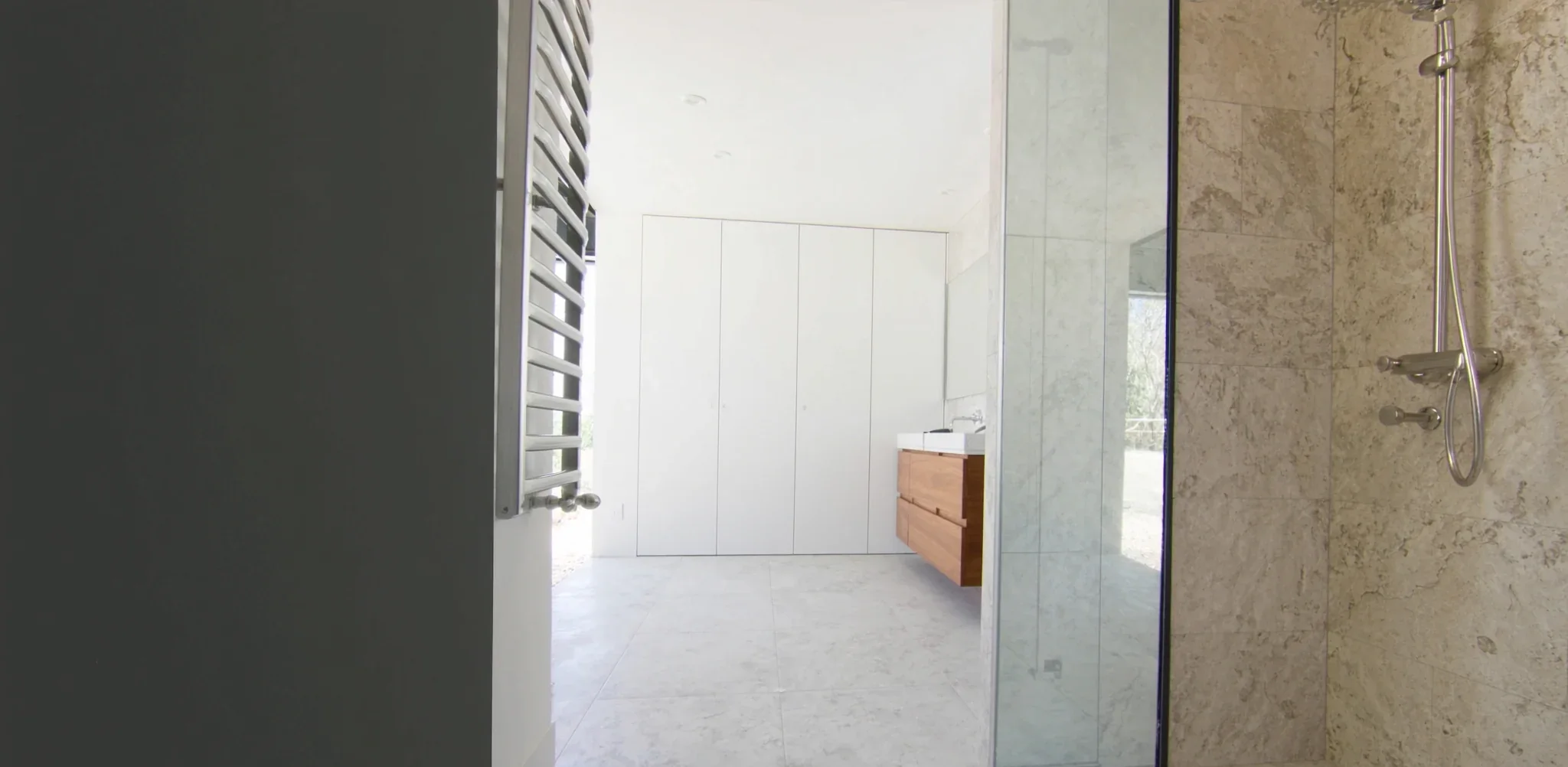
Waterproofing across South Australia
Waterproofing is the membrane system installed under tiles in showers, bathrooms, laundries, balconies and other wet areas so water cannot reach the structure. SA Tiling Pro installs waterproofing across Adelaide and all of South Australia for homeowners, builders and renovators who want the membrane done properly to AS 3740 before a single tile goes down.
- Shower and bathroom membranes
- Laundry, ensuite and toilet areas
- Balcony and alfresco waterproofing
- Puddle flanges and penetrations
- Substrate preparation and screeding
Waterproofing done properly
Waterproofing is the membrane system that sits between the substrate and the tiles in any wet area. In a bathroom that means the shower floor and walls, the floor around the bath, and the junctions where floor meets wall. On a balcony or alfresco it means a membrane rated for external exposure and movement. The membrane is applied in liquid or sheet form over a primed, sound substrate, with bond breakers at every internal corner and flanges or collars at every drain and penetration.
Good waterproofing is measured, not guessed. AS 3740 sets out where the membrane must go and how far it must extend up shower walls, across floors and at junctions, hobs and doorways. The membrane goes on in at least two coats to the thickness the manufacturer specifies, each coat cured before the next. Internal corners, hobs and thresholds get a bond breaker so the membrane can move without tearing. Nothing gets tiled until the membrane has cured and been checked.
Most waterproofing failures start with the substrate, not the membrane. Flexing timber floors, unsealed sheet joints, dusty concrete and damp screed all stop a membrane from bonding. We check moisture and movement first, then patch, prime and seal so the membrane has something solid to grip. Falls are formed in the screed so water runs to the drain instead of sitting under the tiles. Much of Adelaide sits on reactive clay that moves with the seasons, so the membrane and bond breakers are chosen to handle that movement.
What's included
- Shower and bathroom membranes
Full membrane to shower floors, walls, hobs and niches, plus the bathroom floor and wall-floor junctions as AS 3740 requires. Suits hob, hobless and walk-in showers.
- Laundry, ensuite and toilet areas
Membrane to floors and around troughs, cisterns and floor wastes in the smaller wet areas that are often overlooked.
- Balcony and alfresco waterproofing
External membranes under tiles on balconies, terraces and alfresco areas, detailed to AS 4654 with falls, drainage outlets and upturns at door thresholds and parapets.
- Puddle flanges and penetrations
Supply and fit of puddle flanges at every floor waste, with the membrane dressed into the flange. Tap, pipe and mixer penetrations are sealed and reinforced.
- Substrate preparation and screeding
Moisture checks, sealing of sheet joints, patching, priming and screeds laid to fall so water reaches the drain.
- Bond breakers and reinforcing
Bond breaker at every internal corner, hob and threshold, with reinforcing bandage or fillet where the substrate can move.
- Remedial waterproofing
Stripping out failed showers and leaking wet areas back to the substrate, then rebuilding the membrane system properly before retiling.
- Waterproofing certificate
A written waterproofing certificate listing the products used, areas treated and dates, for your builder, certifier or your own records.
How we approach waterproofing
- 01
Inspection and free quote
We look at the wet area, check the substrate and drainage, and confirm whether it is a new build, a renovation or a leak repair. You get a written, no-obligation quote.
- 02
Preparation
Old tiles and failed membrane are stripped where needed. Sheet joints are sealed, puddle flanges fitted, screeds laid to fall and everything primed.
- 03
Membrane application
Bond breakers go in first, then the membrane in at least two coats to the specified thickness, with full drying time between coats and no shortcuts on corners, upturns or penetrations.
- 04
Cure, check and certify
The membrane is left to cure to the manufacturer's schedule, then inspected for pinholes, thin spots and missed detail before it is signed off and certified.
- 05
Tiling and handover
Tiles go on with an adhesive compatible with the membrane, and the finished wet area is handed back with the certificate and care advice.
Tile options we work with
Not sure what to choose? We will talk you through what suits the space, the budget and the way it will be used.
Liquid polyurethane membranes
Flexible, tough and suited to balconies, alfresco areas and showers where movement is likely. They need good ventilation while curing and take longer to cure than water-based products.
Water-based acrylic membranes
The everyday choice for internal bathrooms, laundries and ensuites. Low odour and quick to recoat, but not suited to areas that stay permanently wet or submerged.
Sheet membranes
Factory-made sheets give a consistent thickness and can be tiled soon after installation. Seams, corners and drain details take care and are where sheet systems fail if rushed.
Cementitious membranes
Cement-based coatings for concrete substrates, planters, retaining walls and some pool surrounds. They bond well to masonry but need reinforcing at joints and corners because they are less flexible.
Primers, bond breakers and flanges
The membrane is only as good as what sits under and around it. Primer matched to the substrate, a compatible bond breaker and correctly set puddle flanges are part of every job.
Tiles over the membrane
Porcelain, ceramic, stone and mosaics can all go over a cured membrane, but the adhesive must be one the membrane manufacturer approves. Large format and stone tiles need a flat, fully cured membrane and full adhesive coverage.
Waterproofing questions
Straight answers to the questions we hear most about this service.
How long does waterproofing take before tiling can start?
What affects the cost of waterproofing?
Does the whole bathroom floor need to be waterproofed?
Can you waterproof over existing tiles or an old membrane?
My shower leaks. Is it the waterproofing or the grout?
Do I need council approval or a certificate for waterproofing in South Australia?
Waterproofing anywhere in South Australia
Choose your region to find your suburb page and local details.
- Adelaide City & North Adelaide
- Adelaide Western Suburbs
- Adelaide Inner South
- Adelaide Eastern Suburbs
- Adelaide Inner North
- Adelaide North-Eastern Suburbs
- Adelaide Northern Suburbs & Adelaide Plains
- Adelaide Hills
- Adelaide Southern Suburbs & McLaren Vale
- Fleurieu Peninsula
- Kangaroo Island
- Murraylands, Mallee & Coorong
- Riverland
- Barossa Valley & Light
- Clare Valley & Mid North
- Port Pirie & Southern Flinders Ranges
- Yorke Peninsula & Copper Coast
- Eyre Peninsula & Whyalla
- Limestone Coast & South East
- Port Augusta & Flinders Ranges
- Outback & Far North
- APY Lands
Ready to talk about waterproofing?
Get a free, no-obligation quote. We service every suburb and town in South Australia and are ready to bring your plans to life.