
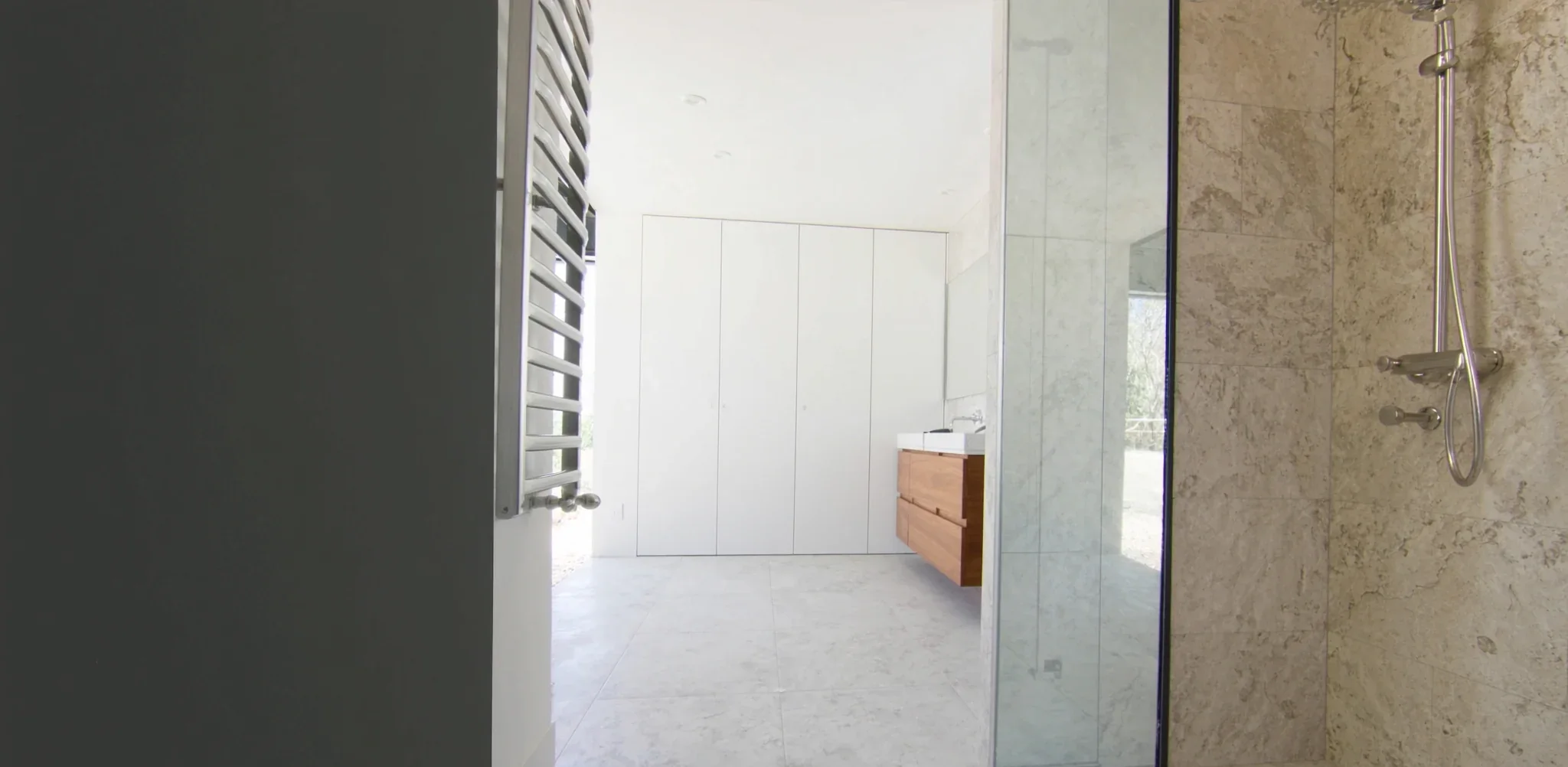
Floor Tiling across South Australia
Floor tiling covers living areas, hallways, kitchens, laundries, bathrooms and alfresco spaces. SA Tiling Pro lays porcelain, ceramic and natural stone floors for homeowners, builders and renovators across Adelaide and all of South Australia. We handle the substrate preparation, levelling, layout and grouting so the finished floor is flat, sound and stays that way.
- Old floor removal
- Substrate preparation and levelling
- Waterproofing to AS 3740
- Layout and setting out
- Large format and rectified tiles
Floor Tiling done properly
Floor tiling starts well before the first tile goes down. We strip old coverings, check the slab or sheet flooring for movement and moisture, and grind or level the surface so the adhesive bed is consistent. Tiles are set out from the main sightline, cut around doorways and fixtures, and bedded in adhesive with full coverage, suited to the tile and substrate. Once set, the floor is grouted, cleaned and, where required, sealed. The result should be a flat, hollow-free floor that wears as intended and, in wet areas, falls to the waste.
Good floor tiling is easy to spot once you know what to look for. Grout lines are straight and even in width. Lippage between neighbouring tiles is kept within tolerance, which matters most with large format and rectified tiles. Cuts sit under skirtings or trims, not exposed in the middle of the room. Wet areas fall to the waste with no ponding. Tapping the floor gives a solid sound with no hollow spots, which indicates proper adhesive coverage. We work to AS 3958.1, the Australian guide to installing ceramic tiles.
Preparation decides how long a tiled floor lasts. Many Adelaide suburbs sit on reactive clay soils that swell and shrink with the seasons, so slabs move. Movement joints, flexible adhesives and crack-isolation membranes take that movement out of the tiles. Wet area floors in bathrooms and laundries are waterproofed to AS 3740 before any tile is laid, and outdoor floors need slip-rated tiles and an exterior-grade adhesive, with balconies and decks over living areas membraned to AS 4654. Layout matters too: a floor set out from the centre with balanced cuts looks right from every doorway.
What's included
- Old floor removal
We lift existing tiles, vinyl, carpet or floating floors and remove old adhesive and underlay. Debris is bagged and taken away.
- Substrate preparation and levelling
Concrete slabs are ground, primed and levelled with self-levelling compound where needed. Timber and sheet floors are stiffened or overlaid with tile underlay before tiling.
- Waterproofing to AS 3740
Bathroom, laundry and ensuite floors are membraned and checked before tiling, with falls set to the floor waste.
- Layout and setting out
We set the floor out from the main sightline or centreline so cuts are balanced and grout lines run true through doorways and into adjoining rooms.
- Large format and rectified tiles
Tiles 600 x 600 mm and larger are back-buttered for full coverage and laid with a levelling system to avoid lippage and hollow spots.
- Movement and expansion joints
Perimeter and intermediate movement joints are built in to suit the room size and substrate, then finished with matching flexible sealant.
- Grouting and sealing
Cement or epoxy grout is applied, cleaned off and left to cure. Porous tiles and natural stone are sealed before and after grouting as the product requires.
- Skirting tiles and trims
Matching skirting tiles, aluminium trims or timber skirtings are fitted to finish edges and cover perimeter joints.
How we approach floor tiling
- 01
Site visit and quote
We measure the area, check the substrate and discuss tile choice, layout and any waterproofing needed. You receive a free, written quote with no obligation.
- 02
Preparation
Old floor coverings come up, the substrate is cleaned, repaired and levelled, and wet areas are waterproofed and left to cure.
- 03
Setting out and laying
Tiles are set out, cut and laid in the correct adhesive for the tile and substrate. Large format tiles are levelled as they go.
- 04
Grouting and finishing
Once the adhesive has cured, the floor is grouted, movement joints are sealed and trims or skirtings are fitted.
- 05
Clean-up and handover
The floor is cleaned, sealed if required, and walked through with you. We explain curing times and how to care for the finish.
Tile options we work with
Not sure what to choose? We will talk you through what suits the space, the budget and the way it will be used.
Porcelain
Dense, low-porosity and hard-wearing, porcelain suits high-traffic living areas, kitchens and hallways. It is harder to cut than ceramic and needs a suitable polymer-modified adhesive.
Ceramic
Lighter and easier to cut, ceramic is a sound choice for bedrooms, laundries and lower-traffic rooms. Check the wear rating matches the room's use.
Natural stone
Travertine, limestone, marble, bluestone and granite each need sealing and a stone-specific adhesive. Softer or acid-sensitive stones suit rooms that are cleaned with care.
Large format tiles
Tiles from 600 x 600 mm up to 1200 x 600 mm and larger reduce grout lines but demand a flat substrate. Levelling compound and a tile levelling system are usually needed.
Timber-look plank tiles
Plank porcelain gives a timber appearance with tile durability. Planks are laid with an offset of no more than a third of their length to limit lippage from tile bowing.
Terrazzo-look and mosaics
Terrazzo-look porcelain gives the pattern without on-site pouring. Mosaics on mesh suit shower floors and small areas where extra grout lines help with falls and slip resistance.
Floor Tiling questions
Straight answers to the questions we hear most about this service.
How long does floor tiling take?
What affects the cost of floor tiling?
Which tiles are best for floors?
Does a tiled floor need waterproofing?
What grout should I use on a tiled floor?
How do I care for a tiled floor?
Floor Tiling anywhere in South Australia
Choose your region to find your suburb page and local details.
- Adelaide City & North Adelaide
- Adelaide Western Suburbs
- Adelaide Inner South
- Adelaide Eastern Suburbs
- Adelaide Inner North
- Adelaide North-Eastern Suburbs
- Adelaide Northern Suburbs & Adelaide Plains
- Adelaide Hills
- Adelaide Southern Suburbs & McLaren Vale
- Fleurieu Peninsula
- Kangaroo Island
- Murraylands, Mallee & Coorong
- Riverland
- Barossa Valley & Light
- Clare Valley & Mid North
- Port Pirie & Southern Flinders Ranges
- Yorke Peninsula & Copper Coast
- Eyre Peninsula & Whyalla
- Limestone Coast & South East
- Port Augusta & Flinders Ranges
- Outback & Far North
- APY Lands
Ready to talk about floor tiling?
Get a free, no-obligation quote. We service every suburb and town in South Australia and are ready to bring your plans to life.